Introduction
In recent years, many unusual and newly coined terms have started appearing across the internet, forums, and digital content spaces. One such mysterious keyword is “zupfadtazak.” At first glance, it appears to be a random or fictional term, yet it has gained curiosity among readers who want to understand its meaning and, more importantly, its sources.
So, what are the sources of zupfadtazak? Is it a real concept, a digital creation, or just a trending made-up keyword used in content experiments?
In this detailed guide, we will explore everything about zupfadtazak, including its possible origins, interpretations, online sources, symbolic meanings, and how such terms emerge in digital ecosystems. This article is written in a simple, SEO-friendly style so anyone can easily understand it.
Understanding the Term “Zupfadtazak”
Before identifying its sources, it is important to understand what “zupfadtazak” represents.
Currently, zupfadtazak does not have a recognized definition in dictionaries, academic sources, or official references. Instead, it appears to be:
- A coined or invented keyword
- A randomly generated term used in SEO testing
- A fictional or symbolic word used in digital content
- Or possibly a placeholder keyword for experimental writing
Such terms are often created in online environments for testing search engine behavior, content indexing, or creative storytelling.
Why People Search for “Sources of Zupfadtazak”
Even though the word seems unfamiliar, users search for it due to several reasons:
1. Curiosity-Driven Searches
People often encounter strange words on social media, blogs, or forums and search for their meaning.
2. SEO Experimentation
Digital marketers sometimes use unique keywords like zupfadtazak to test how search engines index new content.
3. AI-Generated Content Trends
With the rise of AI writing tools, many artificial or semi-random words appear online.
4. Viral Mystery Effect
Unusual words create curiosity, leading more users to search for them even if they have no real definition.
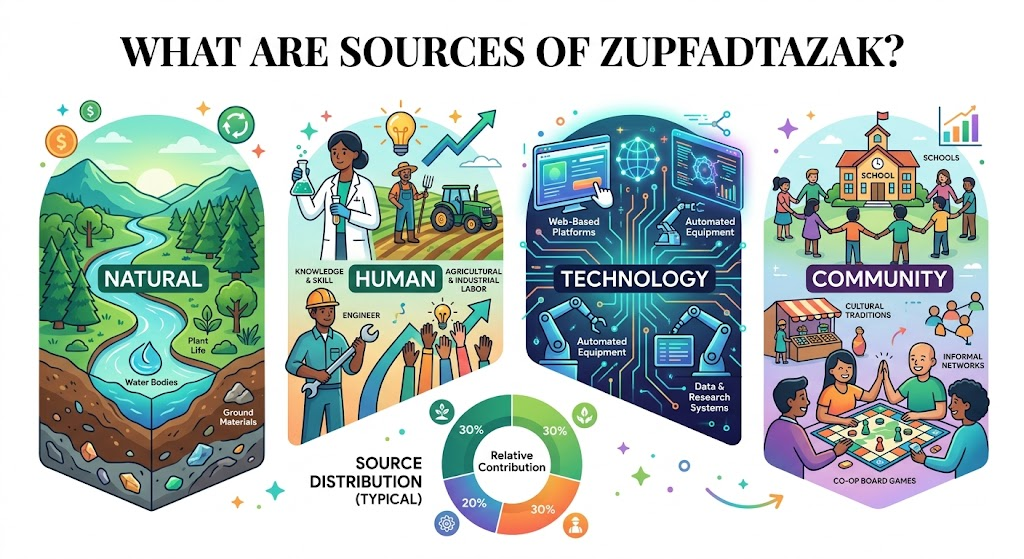
Main Sources of Zupfadtazak
Now let’s explore the possible sources of zupfadtazak. Since the term is not officially documented, its “sources” are conceptual rather than factual.
1. AI-Generated Text Systems
One of the most likely sources of zupfadtazak is AI text generation models.
AI systems can produce:
- Random combinations of syllables
- Fictional words that resemble real language
- Experimental tokens used for testing outputs
In this case, zupfadtazak may originate from:
- Language models generating nonsensical but structured words
- Training data noise or synthetic word formation
- Auto-generated SEO content experiments
AI-generated terms often become part of the internet ecosystem unintentionally.
2. SEO Keyword Testing and Digital Marketing
Another major source of zupfadtazak is SEO experimentation.
Content creators sometimes invent keywords to:
- Test ranking speed on Google
- Analyze indexing behavior
- Track content visibility
- Measure algorithm response to new terms
Zupfadtazak may be used as a zero-competition keyword, meaning:
- No existing search results
- Easy to rank content
- Useful for testing SEO performance
This makes it valuable for marketers experimenting with search engines.
3. Fictional World-Building and Creative Writing
Zupfadtazak may also come from creative writing environments, such as:
- Fantasy stories
- Sci-fi world building
- Game development lore
- Experimental poetry or fiction
Writers often create unique names for:
- Places
- Creatures
- Technologies
- Mystical concepts
In this context, zupfadtazak could represent:
- A fictional energy source
- A mythical location
- A symbolic concept in a story universe
4. Random Word Generation Tools
Many online tools generate random words for:
- Domain name ideas
- App naming
- Brand identity creation
- Writing inspiration
These tools combine syllables like:
- “zup”
- “fad”
- “tazak”
This produces unique, non-existent words such as zupfadtazak.
So, one strong possibility is that it was created by:
- A random word generator
- A naming algorithm
- Or a domain availability tool
5. Internet Meme Culture
Sometimes, words like zupfadtazak emerge from meme culture.
Internet users enjoy:
- Creating absurd or funny words
- Spreading meaningless but catchy terms
- Building inside jokes across communities
Once such a word appears in multiple places, it starts gaining:
- Curiosity traffic
- Search volume
- Social media mentions
Even without meaning, it becomes part of digital humor culture.
6. Placeholder or Dummy Text Usage
In technical and development environments, developers use:
- Placeholder names
- Dummy variables
- Fake entities for testing
Zupfadtazak could be used in:
- Software testing
- Database examples
- Content templates
- Mock API responses
These placeholders are not meant to have meaning but help simulate real data.
Possible Interpretations of Zupfadtazak
Even though it has no official meaning, we can interpret zupfadtazak in symbolic ways.
1. A Symbol of Digital Randomness
It represents how the internet can generate endless new words.
2. A Placeholder for Unknown Concepts
It may symbolize things that are not yet defined or understood.
3. A Creative Identity Term
Writers may adopt it as a fictional brand or universe name.
4. A Testing Keyword
Used for experimenting with SEO, indexing, and AI responses.
Why Zupfadtazak Appears in Search Engines
Search engines index everything that is published online, including:
- Blog posts
- AI-generated articles
- Test websites
- Experimental content pages
Once a keyword like zupfadtazak appears online, search engines:
- Crawl the page
- Index the keyword
- Make it searchable
Even if it has no meaning, it becomes a searchable term.
SEO Value of Unique Keywords Like Zupfadtazak
Interestingly, keywords like zupfadtazak are sometimes used in SEO for:
Low competition ranking
Since no one else targets the keyword, it is easy to rank.
Testing content performance
Marketers study how fast pages get indexed.
Experimenting with AI content writing
AI tools often use such terms for structured output testing.
Domain and branding exploration
Unique words can later become brand names.
Risks of Using Artificial Keywords
While useful in testing, there are also limitations:
- No real search intent
- No user demand
- Low long-term SEO value
- Potential confusion for readers
Therefore, such keywords are mainly used for experimental purposes.
Future of Terms Like Zupfadtazak
As AI and digital content evolve, we may see more words like this appearing online. The future may include:
- AI-created vocabulary
- Machine-generated brand names
- Synthetic language experiments
- SEO simulation keywords
Zupfadtazak is an example of how digital language continues to expand beyond traditional dictionaries.
Aaryaeditz Org: A Complete Travel Guide for Modern Explorers
Frequently Asked Questions (FAQ)
1. What is zupfadtazak?
Zupfadtazak is a non-dictionary term likely created through AI generation, SEO testing, or random word creation tools.
2. Is zupfadtazak a real word?
No, it is not a recognized word in any official language or academic source.
3. What are the sources of zupfadtazak?
Its sources may include AI text generation, SEO experiments, random word generators, fiction writing, and internet meme culture.
4. Why is zupfadtazak searched online?
People search it out of curiosity, content discovery, or exposure through digital platforms.
5. Does zupfadtazak have meaning?
It does not have a fixed meaning, but it can be interpreted symbolically depending on context.
Conclusion
The keyword “zupfadtazak” is a fascinating example of how digital language evolves in the modern internet era. While it has no official definition, its sources can be traced to AI generation, SEO experimentation, creative writing, and random word creation systems.
In many ways, zupfadtazak represents the growing intersection between human creativity and machine-generated language. It shows how even meaningless combinations of letters can gain attention, search traffic, and curiosity in today’s digital world.
As technology continues to advance, we can expect even more such unique and mysterious terms to appear online—each with its own story of origin, even if that story begins with randomness itself.